





The Reason why More Businesses are Opting to Use Self Storage to Get Additional Space
Offices are costly in a very short time. An additional desk becomes another shelf, stacks of inventory begin to creep into corridors, and soon the working environment can be considered a cramped stockroom rather than the place where people may think. Self storage facility in isolating workspace and storage space.
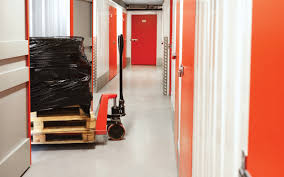
Many businesses reach that point silently and then they realize that they need additional space.
That is one of the reasons why self storage is becoming a surprisingly widespread practice among firms in Hong Kong. Small businesses in particular are devising methods to remain dynamic without having to sign bigger leases on office that are a fortune in monthly payments. The issue can be addressed quicker and at a lower cost by renting storage space.
And frankly, lots of companies do not even have to have a larger office. They only require an outlet to the overflow.
This was early discovered by online vendors. Small offices and apartments have a limit to the number of product boxes they can accommodate until the everyday running becomes irritating. Orders are confused. Packing becomes chaotic. During lunchtime, somebody trips over inventory. Small ecommerce businesses were allowed to breathe with self storage units without having to commit to contracts with warehouses that they could not afford at the time.
Other firms are utilizing mini storage almost as an extension of a back room. Marketing literature, exhibition booths, stored files, secondary furniture, inventory. Items that are important, but do not necessarily require being at the desk of employees on a daily basis.
A photographer friend of mine has a storage unit where he stores lights and props. It became much easier to work in his studio afterwards. Prior to that he defined it as creative suffocation that has trip hazards. Fair description honestly.
It also has fewer pressures when business inventory has a good place to reside. Disarray is more of a work problem than an acknowledged issue. Employees get distracted. Small offices are crowded more easily. Even customers will notice that a workspace appears crowded with odd boxes pushed into corners.
Self storage assists in isolating workspace and storage space. Sounds simple because it is.
Business habits were also altered in weird ways due to remote work. Certain startups nowadays do not have offices at all. Work is done remotely at home or coworking centers as inventory and equipment remain within storage facilities within the immediate area. That arrangement was temporary five years ago. It has become normal.
The flexibility is important as well. Businesses grow unpredictably. The inventory is fine one month and then the sales begin to boom and there is no space to place anything. Storage rental allows the owner to expand or contract space without the exhausting long-term commercial lease processes.
And there is a monetary aspect that people enjoy at once. In Hong Kong, office space is very expensive. It hurts to use a good office space to keep outdated documents or surplus stock when you do the calculations correctly. It just makes sense to put nonessential items in self storage.
Others are providing climate-controlled spaces and 24-hour entry, which is beneficial to businesses that are storing electronics, paperwork, fabrics, or other sensitive goods. No one would wish to have humidity quietly ruin the stock in the background and pretend that all is well.
And ironically, lots of business owners initially rent storage space when business lives are stressful, such as relocations or expansion, and find themselves retaining it permanently since the business operates more smoothly thereafter. Less mess. Better organization. Less time having to listen to the person screaming, Who moved the boxes again?
Minor operation advances accumulate rapidly in small enterprises. Self storage only goes about fixing a few issues simultaneously without creating a big dramatic scene of it.